
Intro to Timber Framing
5 Days, Open to All
Fall 2026
December 7-11
Class size: 10
Cost: $1,070
Materials: $35
Looking to get into timber framing, but don't know where to start? This course is intended for beginners who want to get an introduction in a relaxed environment, where we can focus on the tools, the basic joints, and a preliminary understanding of layout and building planning.
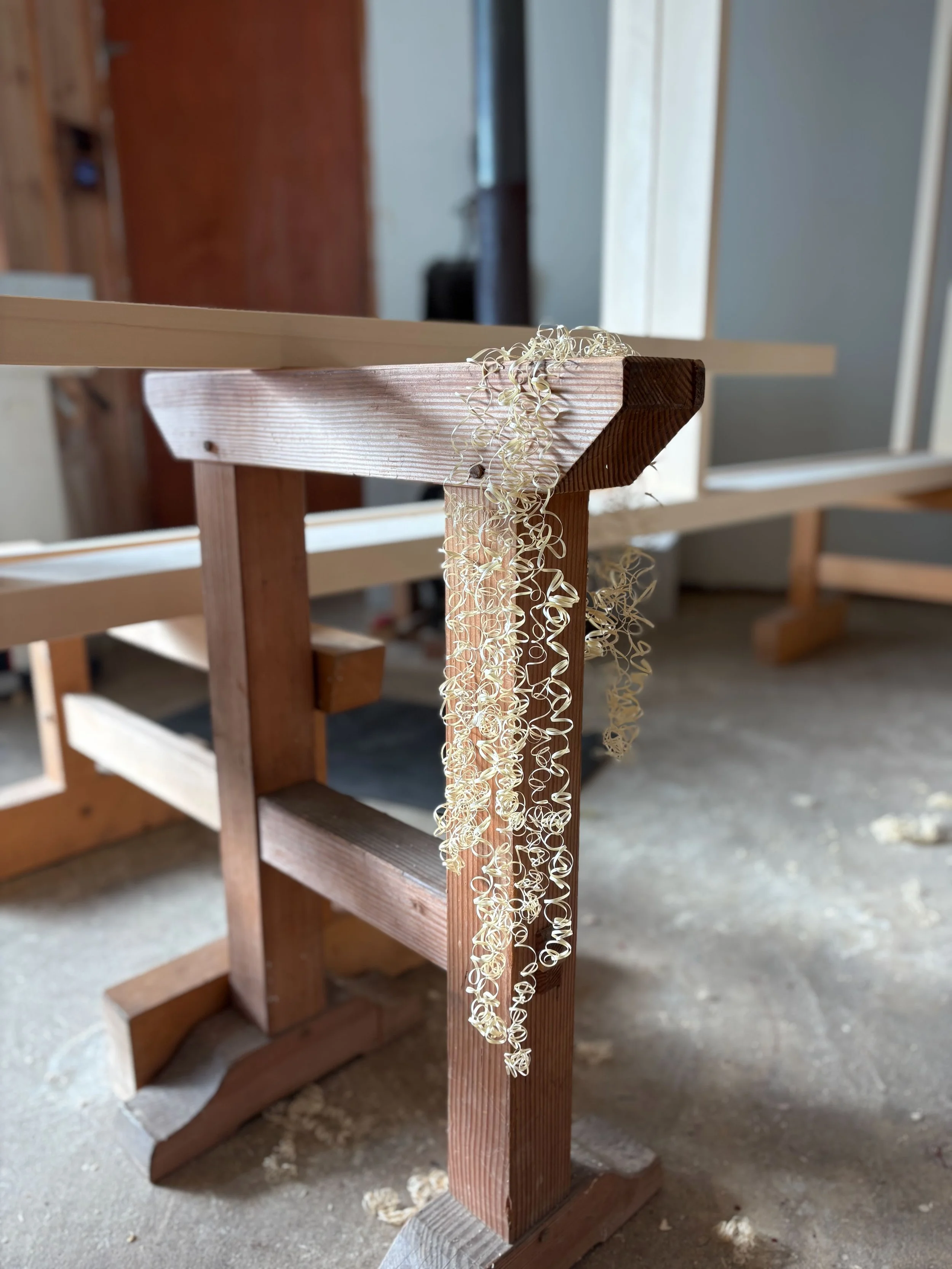
This class is a balance of presentation/lecture, design practice, tool setup, and joinery practice through a group project of a pair of timber horses.
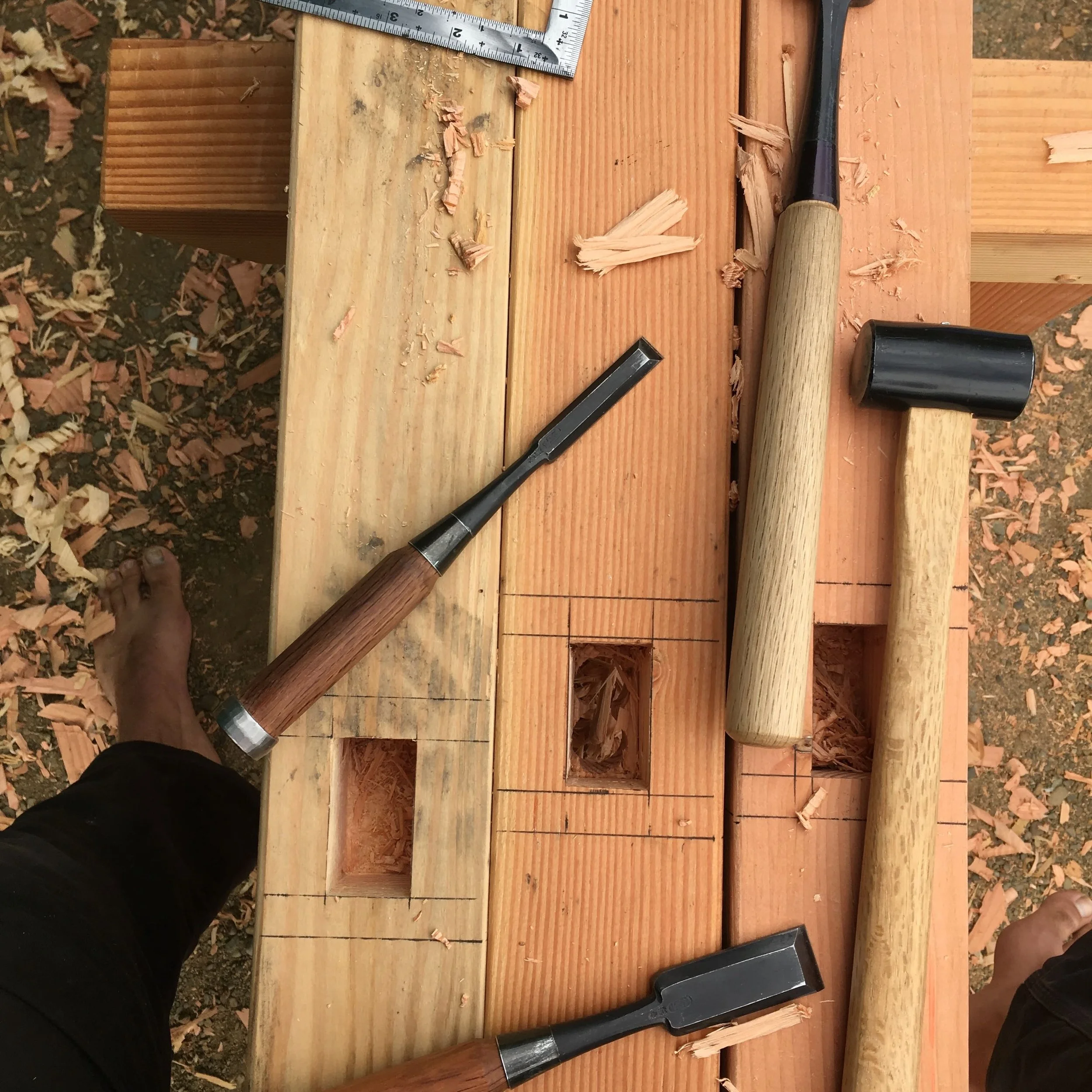
Students will learn a broad range of skills that will help them understand the basics of timber frame construction. There will be a heavy emphasis on hand-cut joinery, which is the most historically prevalent form of timber construction, and is the most accessible, as most work can be done with a chisel, saw, drill, and some layout tools.
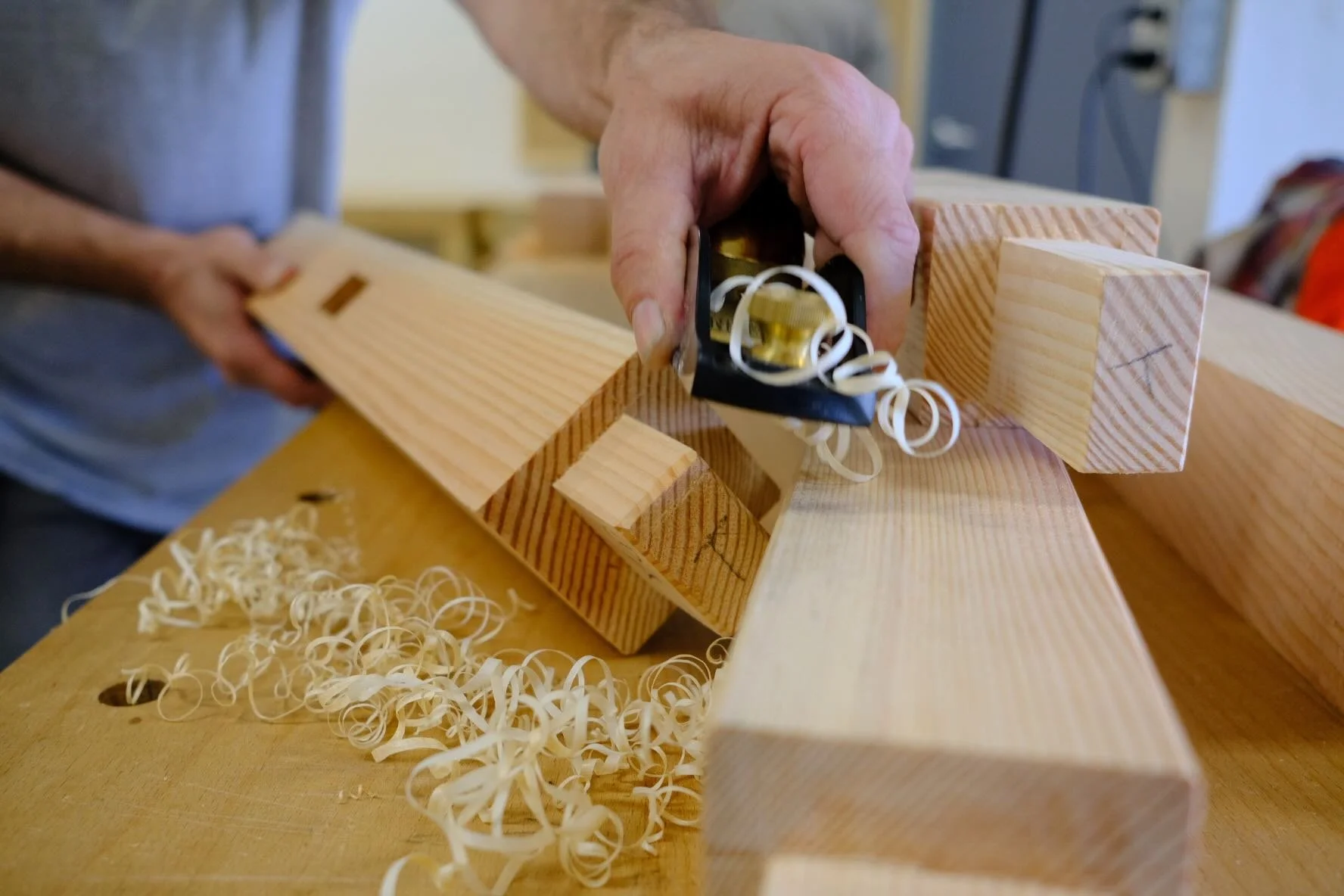
Each student will learn to sharpen their own chisels and plane irons, as well as how to adjust and modify planes to ensure they work effectively. We will regularly come back to sharpening as needed to help build muscle memory and highlight the importance of well-set-up tools.
Students will work collaboratively to grade, orient, and select members for a pair of timber horses, the group project for this class. We will go through placement considerations, reading plans, and labeling members. Once each part has been selected, students will learn to lay out mortises and tenons, the primary joints used in timber frame construction.
Each day, we will gather for brief presentations, demonstrations, and Q&A sessions. Topics will include an overview of the different types of frames, terminology, design considerations, and practical parameters when considering timber frame construction.
When thinking of timber framing, it’s easy to imagine huge, heavy timbers. However, the exact same principles that are applied to building a large barn can be applied to a shed or small workshop. The techniques are versatile, encompassing wood that can be rough-hewn or smooth finished.
There are many different regional styles of timber framing, but we like to think of a split between Atlantic traditions and Pacific traditions. We will compare and contrast construction methods, and similarly, both Eastern and Western tools will be welcome in this class.
Tools
There are many options when it comes to timber framing tools. Some of the questions to ask yourself: What scale of work will you do after the course? Do you want to stick with only Western tools? Only Japanese tools? Or a mix of the two? What kind of budget are you working with? If you don't know, bring just the required list and use this class as an opportunity to ask questions and try different tools so you know what to look for.
Required
At least one striking chisel - ¾” to 1” wide will be most useful
Rip saw - 270mm to 300mm Japanese ryoba or kataba (or western tenon or half rip saw)
Cross-cut saw - 270mm Japanese dozuki or western carcass backsaw
Hammer or mallet (hammer for Japanese chisels, wooden mallet for western chisels)
Sharpening stones - 1000g and 8000g water stones recommended (add in a 3000/4000 grit if you can)
Optional
Paring chisel(s) - ¾” to 1-½” wide will be most useful
Block plane
Rabbet plane
Smoothing plane
Combination square
Pencil or other preferred layout writing implements
Tape measure
Framing square or sashigane
Utility or layout knife
Any other tools you like to work with or have questions about setting up!
Prerequisites
Open to All. Open to beginners who are just getting started, as well as experienced woodworkers who are expanding their knowledge of timber framing. Most importantly, this class is heavily focused on handwork, building strength, awareness, and sensitivity. Patience and humility are valuable traits for success.
Class Information and Registration
Classes run 9:00 am to 5:00 pm Monday through Friday in Building 304 at Fort Worden. Map. Read our What to Expect page for general information about the school and our course Registration Policy. We highly encourage you to sign up for the waitlist if the course is full.
Furniture Design, Hand Tool Woodworking
Port Townsend, WA